![kimoby-logo_g-black (4).webp]](https://help.kimoby.com/hs-fs/hubfs/kimoby-logo_g-black%20(4).webp?height=40&name=kimoby-logo_g-black%20(4).webp)
Adjust your settings to your needs when setting up your account to optimize Go to your needs or update them anytime something changes!
Quick Links
Billing
We use a simple model to bill usage of loaner vehicles in Kimoby Go. Billing is based on the type of tracking used and active the loaner vehicles are during the month, so you only pay for what you use.
- Tier 1 — OTA (Over the Air): OTA-connected vehicles are billed at a flat monthly rate per vehicle. Once a vehicle is connected, it’s charged for the month, regardless of how long it’s active.
- Tier 2 — OBD2 (Physical tracking device): OBD2-connected vehicles are billed based on actual daily usage. Each day’s highest number of active OBD2 vehicles is recorded and averaged across completed days.
- Tier 3 — Non-connected: Non-connected vehicles follow the same daily peak average model as Tier 2. Only vehicles active during the month are counted.
Settings
Pools
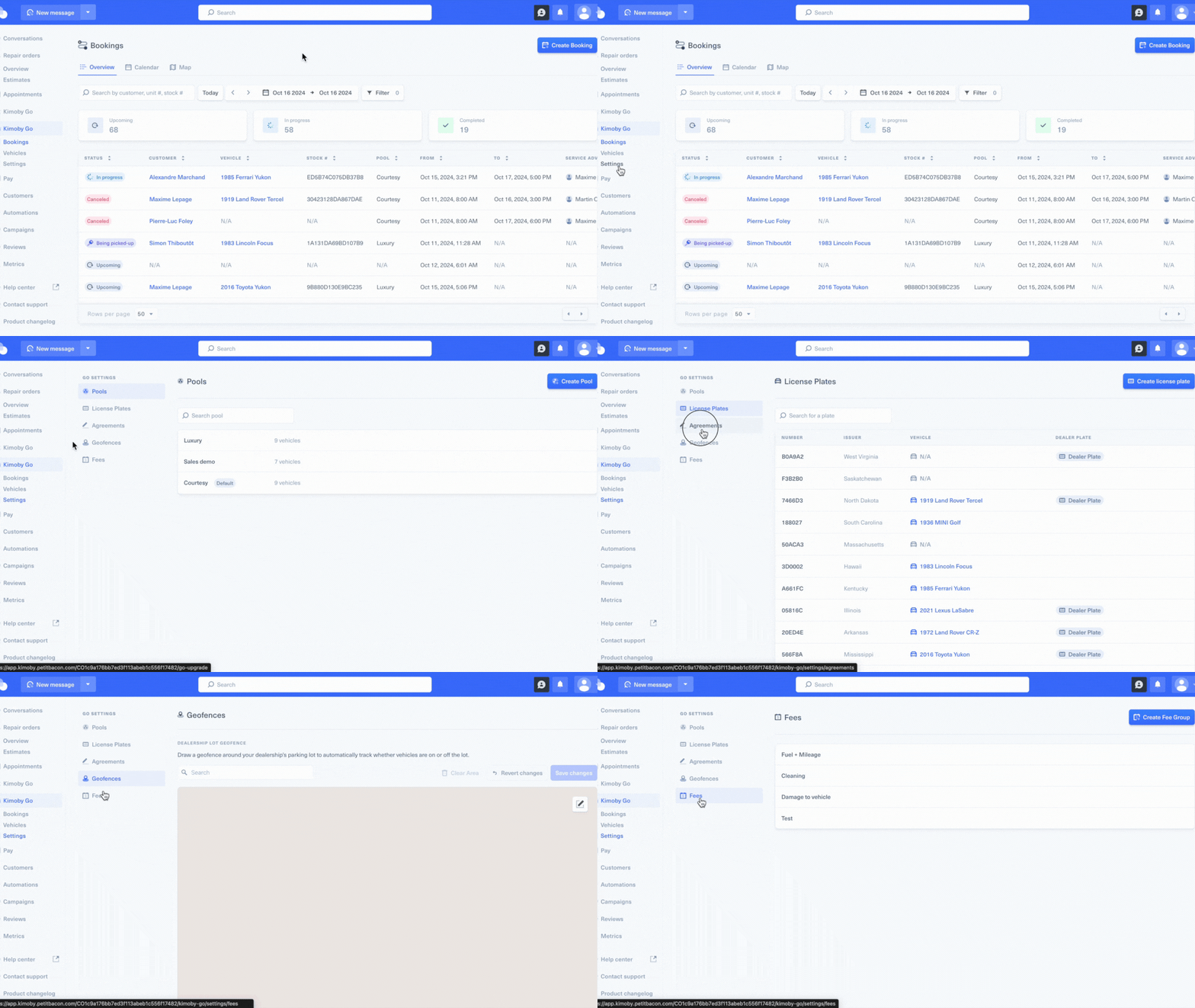
The Pools settings allows you to create and manage your vehicle pools. Pools are groups of similar vehicles and are useful when creating bookings, so that a specific vehicle does not need to be selected. Instead one will be automatically assigned from the selected vehicle pool.
To create a new vehicle pool:
- Click on the Kimoby Go tab.
- Click on the Settings sub-tab.
- Under Go Settings, click on Pools (selected by default).
- Click Create Pool.
- Enter the vehicle pool name.
- Click on a vehicle from the list to add it to the pool. Click on it again to remove it.
- When finished, click Create Pool.
To edit an existing vehicle pool:
- Click on the Kimoby Go tab.
- Click on the Settings sub-tab.
- Under Go Settings, click on Pools (selected by default).
- Click on the vehicle pool you want to edit.
- Click on a vehicle in the list to add or remove it from the pool.
- Click Save when finished.
License Plates
The License Plates section allows you to create and manage your license plates and/or dealer plates. This allows you to freely switch plates between vehicles in Kimoby.
To add a license plate:
- Click on the Kimoby Go tab.
- Click on the Settings sub-tab.
- Under Go Settings, click on License Plates.
- Click Create license plate.
- Enter the plate number and select the issuing province.
- Click the Dealer Plate check box if this is a dealer plate.
- Choose the vehicle the license plate is currently assigned to. This section can be left blank if no vehicle is currently assigned.
- Click Create license plate when finished.
To manage an existing license plate:
- Click on the Kimoby Go tab.
- Click on the Settings sub-tab.
- Under Go Settings, click on License Plates.
- Click on the license plate you want to modify.
- Click on the vehicle drop down menu to change the assigned vehicle.
OR
Click on the X to simply remove the assigned vehicle. - Click on Edit license plate when finished.
Agreements
In the Agreements section, you can make adjustments to the rental agreement and rental receipt templates, allowing your customers to easily sign these important documents directly on their mobile devices, without the hassle of printing and scanning paper copies.
To edit the text on an existing agreement or receipt:
- Click on the Kimoby Go tab.
- Click on the Settings sub-tab.
- Under Go Settings, click on Agreements
- Click on edit button
next to the loaner or receipt you want to modify.
- Use the text editor to change the text visible in the agreement.
- Click Update agreement when finished.
Agreement Settings
Vehicle return receipt requires signature: When this is turned on, the vehicle return receipt will require a signature from the customer before the booking can be completed.
Send vehicle return receipt to customer: When this is turned on, Kimoby will automatically send rental receipts to customers via SMS.
Driver's license required: When this is turned on, the driver’s license information will be required before the booking can begin.
Proof of insurance required: When this is turned on, the driver’s insurance information will be required before the booking can begin.
Geofences
Your Geofence is a virtual boundary that changes a vehicle’s status to “On Lot” or “Off Lot” when it enters or exits the designated area. This section allows you to define this designated area.
To create the geofence:
- Click on the Kimoby Go tab.
- Click on the Settings sub-tab.
- Under Go Settings, click on Geofences.
- In the map area, click on the Draw geofence
button.
- Click on the map to define the corners of your dealership lot.
- When finished, click on the Draw geofence
To edit the geofence position:
- Click on the Kimoby Go tab.
- Click on the Settings sub-tab.
- Under Go Settings, click on Geofences.
- In the map area, click on the blue squared-off area to edit the borders of the geofence.
- Click and drag the borders to adjust the geofence area.
- You can click Clear Area to erase the geofence, or click Revert changes to undo any changes you’ve made to the geofence.
- Click Save changes when finished.
Coverage limits geofence
This geofence will notify you when a customer has driven the vehicle outside of the allowed provinces, states, or country. This is especially useful if your store is located in a border city.
Using the drop-down menu, select the provinces, states or countries the customer is allowed to drive the vehicle in. Click Save changes when finished.
Fees
The Fees section allows you to create and manage fees and fee groups related to Kimoby Go. For example, fees for daily usage, missing fuel, mileage, cleaning, etc. Fee groups are used to organize your individual fees by vehicle pool. These fee groups can be applied when ending a booking and billing the customer.
To create a new fee group:
- Click on the Kimoby Go tab.
- Click on the Settings sub-tab.
- Under Go Settings, click on Fees.
- Click Create Fee Group.
- Enter a name for the group and click Create Fee Group.
- Under the Used In field, select the vehicle pool you want the fee group to be used in.
To add new fees to a fee group:
- Click on the Kimoby Go tab.
- Click on the Settings sub-tab.
- Under Go Settings, click on Fees.
- Click on an existing fee group.
- Scroll down to the bottom of the page and click Add Fee.
- Choose the type of fee: Daily, Late return, or Flat.
- Enter the fee name, description, and amount.
- Click Save changes when finished.
Vehicles
The Vehicles section allows you to set alerts when loaner vehicles reach mileage thresholds and allows you to automatically decommission them.
Mileage limit
Maximum mileage: When a vehicle reaches this set mileage, you will be notified that the loaner has reached its limit and should be archived.
Maximum Mileage Threshold: When a vehicle reaches this set mileage, you will be notified that the loaner is approaching its maximum mileage limit.
Decommission After
Decommission after: After this set amount of days, you will be notified and the loaner vehicle will automatically be decommissioned.
Decommission notification: After this set amount of days, you will be notified that the loaner vehicle is approaching its decommission date.
Vehicle Statuses
In the Vehicle Statuses section, you can create new statuses for your vehicles. For example, you can add a “Body Shop” for vehicles getting body work done, or “Needs Inspection” if a vehicle is due for an inspection.
To create a new status:
- Click on the Kimoby Go tab.
- Click on the Settings sub-tab.
- Select the Vehicle Statuses section.
- Click Create Vehicle Status.
- Give the status a name and select a color.
- Check the Block vehicle from being booked box if you want this status to stop the vehicle from being selected for a booking.
- Click Create Vehicle Status.
Check In
The Check In section contains settings for the check in link sent to a customer prior to a booking. The check-in link will allow the customer to fill in driver’s license information. Insurance information, and payment details to make checkout faster.
Enable check-in creation sms notification: Turn this on if you want to automatically send a check-in link to a customer one day before their booking.
Enable check-in reminder sms notification: Turn this on if you want to automatically send a reminder the morning of the customer’s booking to remind them to complete the check-in. This will only send if the check-in hasn’t been completed yet.
Customer Notifications
The Customer Notifications section contains settings for notifying customers after certain events.
Invoice and Receipt: Turn this on if you want the customer to receive a copy of the invoice and rental receipt upon completing payment.
You can use the text editor to customize the message sent to the customer along with the invoice and receipt. After any changes, click Save changes at the top-right.